
Teaching My Kids They Are Enough
By Laura Spiegel
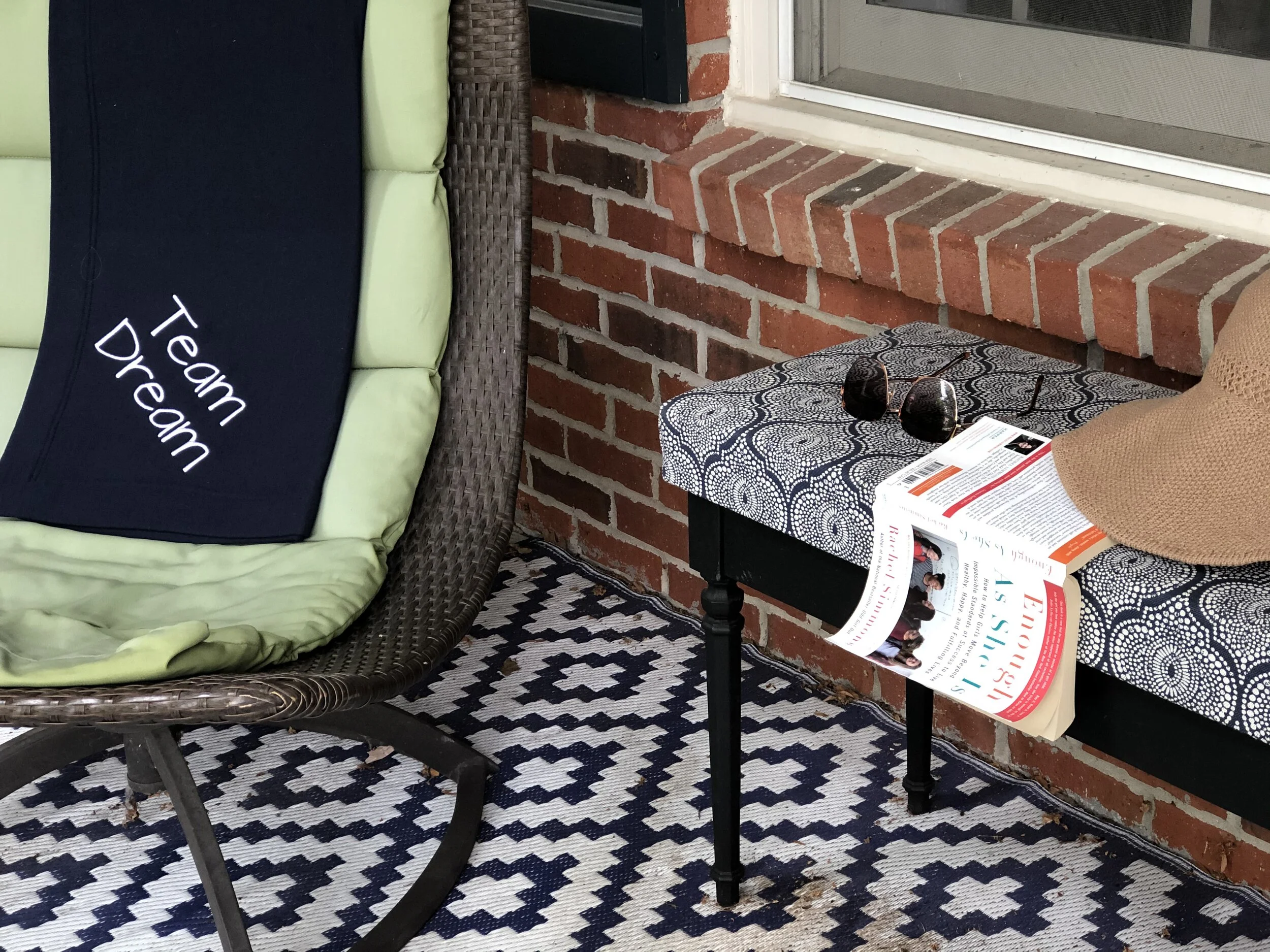
Rachel Simmons had me at the sub-title. “How to help girls move beyond impossible standards of success to live healthy, happy, and fulfilling lives.” Yes, please. Sign my daughter up. Oh, and sign me up too while you’re at it.
I’m a forty-year-old mother of two, a few years into the second season of my career, and I still struggle with the pitfalls that many of the teenagers and young adults interviewed in this book describe. Mental treadmills, overthinking, role overload, discomfort with uncertainty, resistance to vulnerability, and participation in the stress Olympics. Oh, and the need to externally project that everything is okay.
If these were job attributes, I’d be a shoo-in. I suspect many of us would.
I’ve related to every one of these topics since I was young. And when my child was diagnosed with a chronic condition years ago, the magnitude of these struggles – and the stakes associated with them – kicked into full gear. For the first time, I found myself looking at many of these traits not as strengths, but as blind spots.
When our kids are diagnosed with complex, chronic medical conditions, we come face to face with uncertainty. The desire to have our lives in order – with everything occurring at the right place and the right time exactly as we’d imagined – is natural. It’s also laughable. It’s as if the universe has taken our “No surprises for me, thank you very much” placards and drop kicked the hell out of them. Best to rip up the script and invite uncertainty in for a cold one. It’s bound to be chilling on your couch for the long haul.
Overthinking is another natural blind spot for many of us parents. Our instinct is to soak up as much information as we possibly can about what we are dealing with – often in hopes of snuffing out uncertainty. The act of collecting data to make informed decisions for our children is a good thing. The fine art of ruminating, or processing that information over and over in our minds – replete with “what if’s” and “what then’s” – is not. And yet so many of us become ruminators by trade, perfecting our craft in the wee hours of the waning dawn.
And then there’s role overload. As if it needs to be explained. We are caregivers, advocates, negotiators, record keepers, motivators, comforters, and more. We often have multiple children who need our attention and care. Many of us are also partners, spouses, and working professionals. I’ve cried “uncle” during my full-time career days, my staying at home days, and my part-time working from home days. There’s no secret sauce here. No matter how you slice it, role overload for us parents is real.
And yet…
We love with the fiercest of hearts. We wrap ourselves around our children like blankets, calming and warm in the darkest of nights. We would walk to the ends of the earth and talk ‘til we’re blue in the face to get access to the best doctor, the best therapy, the best care plan. The best path forward. We push and we prod day in and day out, all in the name of love. In the name of being a mother.
But we can’t give our children what we don’t have. This statement from Simmons’ book sings to me. I can’t teach my kids to be comfortable with ambiguity if I can’t role model this myself. I can’t help them realize that being strong sometimes means being vulnerable if I’m not willing to let my own guard down. I’m not teaching my kids self-compassion or how to approach the good and bad in life with perspective and clarity of thought if I’m stuck on my own mental treadmill. And I certainly can’t teach them to lead fulfilling lives that burst with the people and moments and values that bring them joy if I’m caught up in my own impossible standards for success.
My kids are enough as they are. They always have been, and they always will be. I am enough too. And I have no doubt that I’m exactly where I am meant to be.
If these themes resonate with you, check out Rachel Simmons’ book “Enough As She Is: How to Help Girls Move Beyond Impossible Standards of Success to Live Healthy, Happy, and Fulfilling Lives.” Backed by dozens of real-life stories and years of research, Simmons helps us teach our kids self-compassion as an alternative to self-criticism, how to manage overthinking, and how to seek support when they need it. I bought this book to help me be a better parent. I never realized that it would help me be a better steward of my own life, as well.